Danone AQUA and Yayasan Pembangunan Citra Insan Indonesia: Multisector Partnerships: Community-Based Clean Water and Safe Sanitation Program in West Java, Indonesia
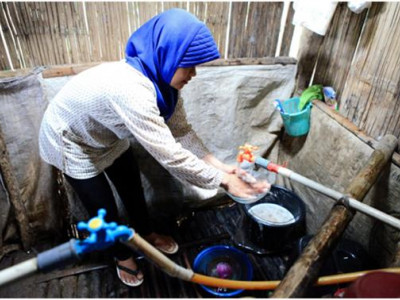
Mitra Phast, or Community-Based Clean Water and Safe Sanitation Program, is a partnership program between Danone AQUA and Yayasan Pembangunan Citra Insan Indonesia (YPCII) that was implemented from July 2010 to June 2012, in Nanggerang village, Cicurug sub-district (Sukabumi district), where two AQUA factories (Mekarsari and Babakan Pari) are located. The objectives of the program are to improve community access to sustainable clean water and safe sanitation facilities; and to increase knowledge and awareness on the importance of applying the five behaviors on hygiene and safe sanitation. AQUA provided 600 water meters and YPCII grant to implement the community empowerment activity. Moreover, AQUA facilitated the communication between YPCII and the Ministry of Public Work (MPW), while actively monitored program implementation through the involvement of its Corporate Social Responsibility/CSR team. YPCII was also involved in conducting the community empowerment activity and contributing some overhead cost for program staff. The local community collectively contributed to the program by donating money, equipment and workforce that in total equal to approximate IDR 600 million (or about USD 63,000) to build pipelines, construction of public facilities and water access to houses.i The Mitra Phast program received a vehicle for the activity, donated by the subdistrict office and 560 of water meters and allocation of funds to cover transportation cost of pipes to water sources from Gugah Nurani Indonesia (GNI), a community-based non-profit organization. MPW then added 47 km pipes and water meter units to distribute clean water.
The impact was 92% of the communities (equivalent to 5,520 people) were able to use house latrine, 20 out of 28 neighborhoods association (RT)ii have become free from open-defecation; improved access to clean water from 17% to 74%; and the morbidity rate for diarrhea disease decreased from 20% to 11%, particularly among children.
Download PDF